
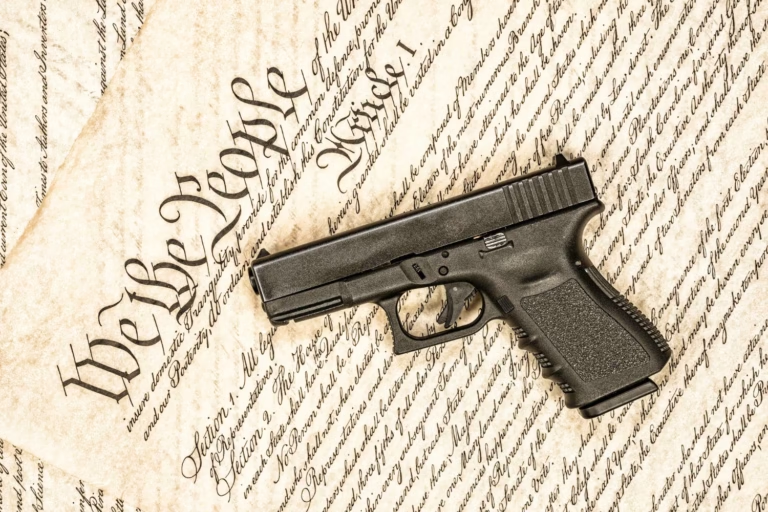
Firearm rights restoration is the process of reinstating an individual’s legal ability to own, possess, or transport firearms after being disqualified by law. People most often lose this right because of felony or domestic violence convictions, but mental health factors can also play a significant role. Federal and state laws may restrict firearm ownership for those who have been involuntarily committed to a psychiatric facility, found by a court to be “mentally defective,” or placed under certain guardianships.
These restrictions are designed to protect public safety, especially during times of crisis. However, laws also recognize that circumstances can change. Restoration gives people a way to show that the reasons for the original disqualification no longer apply, and that they no longer pose a danger to themselves or others. This is where the connection between mental health and gun rights becomes especially important.
Legal pathways to restoring firearm ownership
The exact process for restoring firearm rights can vary depending on where you live and the reasons for your disqualification. Typically, applicants must file a petition with a court or an administrative review board. The burden is on the individual to demonstrate that they have maintained a law-abiding life and that any mental health concerns are well managed.
A gun rights psychological evaluation is often required as part of this process. Because courts and review boards are not clinical experts, they rely on qualified mental health professionals to assess whether someone is ready to resume firearm ownership. Requirements can include waiting periods after a hospital discharge, or documentation of several years with no new legal issues, but a clear psychological evaluation is the thread that runs through most successful petitions.
What is a firearm rights restoration evaluation?
A firearm rights restoration evaluation is a detailed, specialized assessment completed by a forensic-trained mental health professional. Unlike a regular therapy appointment, this evaluation is focused on gathering objective information to help the court understand a person’s current mental health and readiness for gun ownership.
The process usually begins with a comprehensive interview, covering personal history, the events that led to the loss of rights, and changes since then. The evaluator will often use standardized psychological assessment tools to get a full picture of the applicant’s emotional stability, cognitive abilities, and personality traits. A careful review of medical, legal, and mental health records is also required. By looking at both risk factors (such as past violence or substance use) and protective factors (like stable employment, supportive relationships, and treatment compliance), the evaluator forms a holistic view of the applicant’s current situation.
What are evaluators looking for?
During a gun rights psychological evaluation, the primary goal is to assess both individual well-being and public safety. Evaluators focus on several key areas:
- Mental Health Stability: Is the applicant free from symptoms that could lead to unsafe decisions?
- Risk of Harm: Are there any signs of current suicidal thoughts or potential for violence?
- Compliance: Has the individual followed all recommended treatments, therapies, or court requirements?
- Rehabilitation: Is there evidence of long-term recovery from substance use, and a pattern of law-abiding behavior?
The evaluator is looking for clear signs that any condition or situation that previously led to disqualification is now resolved or well managed.
How evaluation reports are used in decision-making
After the evaluation, the mental health professional provides a detailed report for the court or review board. This report is a key piece of evidence. Judges and board members use it to decide whether the applicant can safely and responsibly own a firearm. If the evaluator supports restoration, this carries significant weight. If concerns remain, the court may choose not to restore rights at this time. It is important for applicants to understand that evaluators serve as neutral experts, not advocates, and their findings are based on evidence and professional standards.
Preparing for a firearm rights restoration evaluation
Preparation can make the evaluation process much smoother. Applicants should collect and organize all relevant documents before their appointment. This often includes:
- Complete medical and mental health records related to the disqualifying event
- Hospital discharge summaries, if applicable
- Proof of compliance with any treatment plans or court orders (such as letters from doctors or therapists)
- Legal documents like court orders or police reports
Being open and honest is crucial. Trying to withhold or minimize information is rarely effective, as trained evaluators can identify inconsistencies. Transparency and cooperation help ensure a fair and accurate assessment.
Common misconceptions about the evaluation process
Many people believe that a single mental health crisis or diagnosis means a permanent loss of gun rights. In reality, there is a legal path to restoration because people can and do recover. Another common myth is that any mental health diagnosis is disqualifying. Most often, it is specific conditions that impact safety and judgment, rather than diagnoses like anxiety, depression, or ADHD.
It is also a misconception that the process is designed to be punitive or impossible to navigate. The aim is to ensure public safety, while recognizing the potential for change and growth.
Why evaluator qualifications matter
Choosing a qualified professional for your firearm rights restoration evaluation is essential. Not all mental health providers are equipped for this work. The process requires a forensic-trained evaluator who understands legal standards, risk assessment, and the specific requirements of your state or federal court.
Evaluations completed by someone without forensic expertise may be rejected by the court, resulting in delays and additional costs. Before scheduling, confirm that the provider has experience in forensic evaluations and is knowledgeable about firearm laws in your area.
How to get a firearms restoration assessment
Regaining firearm rights is a serious and sometimes lengthy process, but the psychological evaluation is a powerful tool for demonstrating readiness. A clear, professional evaluation provides courts with the evidence needed to make an informed decision.
If you are seeking to restore your firearm rights and have questions about the evaluation process, the KindestMind team is here to help. We offer supportive, thorough assessments from experienced professionals, and are happy to answer your questions or help you schedule a firearm rights restoration evaluation. Contact KindestMind today to take your next step toward restoring your rights.